Recipes
Prepare An Executive Readout
How to turn a validated assessment package into a focused stakeholder conversation.
Outcome
Use this recipe when the assessment package is ready and you need to prepare the stakeholder conversation.
The goal is not to explain how the review was run. The goal is to decide the message, structure the meeting, anticipate questions, and leave the room with agreed next actions.
Inputs You Need
- Completed review
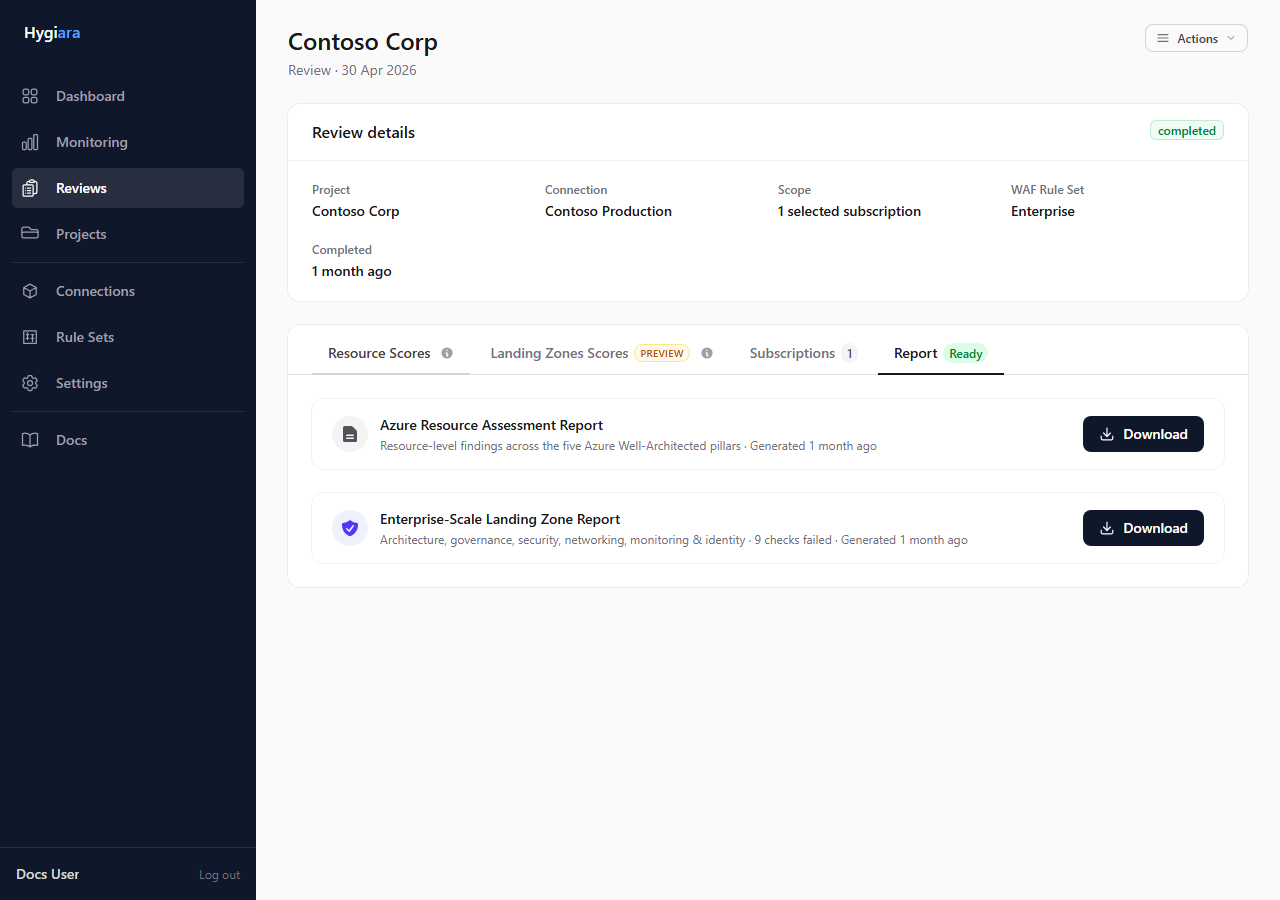
- Downloaded Word report
- Confirmed review scope
- Any known business context, such as critical workloads or upcoming audits
- List of attendees and their expected level of technical depth
- Delivery notes from the assessment run
Workflow
1. Decide the readout objective
Start by deciding what the meeting must achieve. A readout can support different outcomes:
- align leadership on the current risk profile
- secure approval for remediation work
- brief engineering teams before backlog creation
- show progress since a previous review
- explain evidence gaps and required access changes
Write the objective in one sentence. Use it to decide what to include and what to leave in the appendix.
2. Map the audience
Split attendees into decision makers, technical owners, and observers. Each group needs a different level of detail.
Prepare:
- one business-level consequence for each major risk theme
- one technical evidence example for each theme
- one clear decision or action needed from the group
3. Build the opening narrative
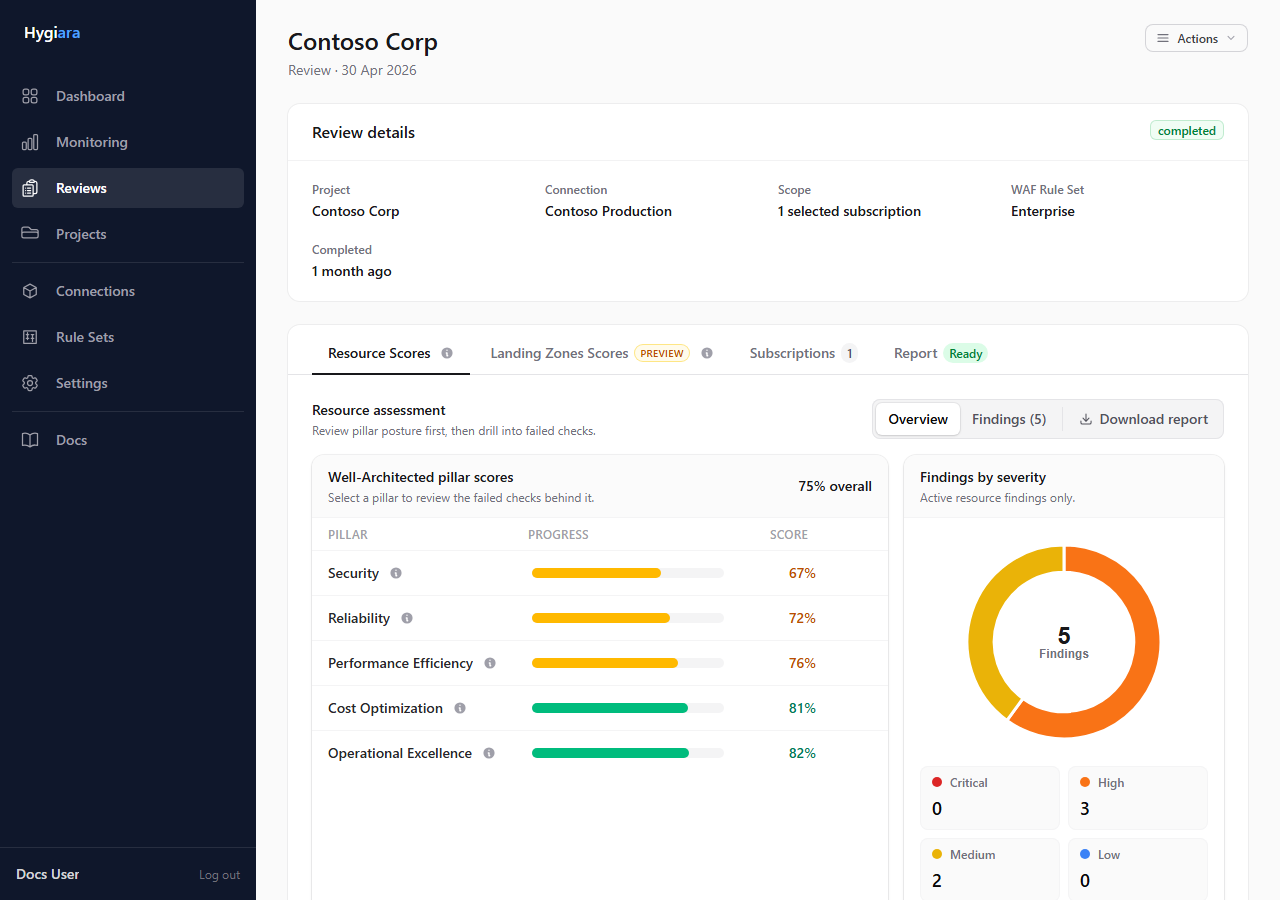
Use the executive summary to frame the current posture, but rewrite it into a spoken narrative:
- overall alignment
- strongest domains
- weakest domains
- concentration of high-priority findings
- whether Landing Zone results change the story
Keep this to two or three minutes. The opening should help stakeholders understand where attention belongs before the detail starts.
Reference: Understanding the report
4. Choose the evidence to show
Do not show every finding. Pick evidence that supports the readout objective.
For each selected theme, prepare:
- the report section or finding reference
- affected subscription or service examples
- why this matters operationally
- what good looks like after remediation
Example: “Operational Excellence is low because monitoring and diagnostic coverage is inconsistent, which means incidents may be harder to detect and investigate.”
5. Prepare the meeting flow
Use a simple structure:
- Scope and assessment context
- Headline posture
- Top risk themes
- Evidence examples
- Recommended priorities
- Decisions and next actions
Keep the scope section short. If the meeting spends too long proving how the assessment was run, it will not get to decisions.
6. Prepare for challenge questions
Have answers ready for:
- “Was this in scope?”
- “How many resources are affected?”
- “Is this urgent or hygiene?”
- “Which team owns this?”
- “Can we validate the fix with another review?”
- “What could not be verified?”
Use the findings appendix for detailed evidence. Do not let the meeting turn into live report navigation unless someone asks for proof.
7. Close with decisions
End with the decisions needed from the room:
- which risks need immediate action
- who owns backlog creation
- whether a rerun is needed after remediation
- when the next review or checkpoint happens
Decisions To Make Before The Meeting
- Meeting goal: awareness, approval, backlog handoff, or progress review.
- Depth: executive-level consequences or engineering-level evidence.
- Evidence set: a small number of representative findings, not the whole appendix.
- Primary ask: budget, ownership, remediation commitment, or follow-up workshop.
- Landing Zone emphasis: lead with Landing Zone results only when platform governance is the main purpose.
Quality Checks Before Handoff
- The meeting has a clear objective.
- The first five minutes can be delivered without reading from the report.
- Each top theme has one evidence example and one consequence.
- You know which questions require the appendix.
- The final slide or closing note has named next actions.